
Golden Gut Carrot
Turmeric Fermented Carrots for a Happy Tummy
RECIPES
Fermentista
3/29/20263 min read
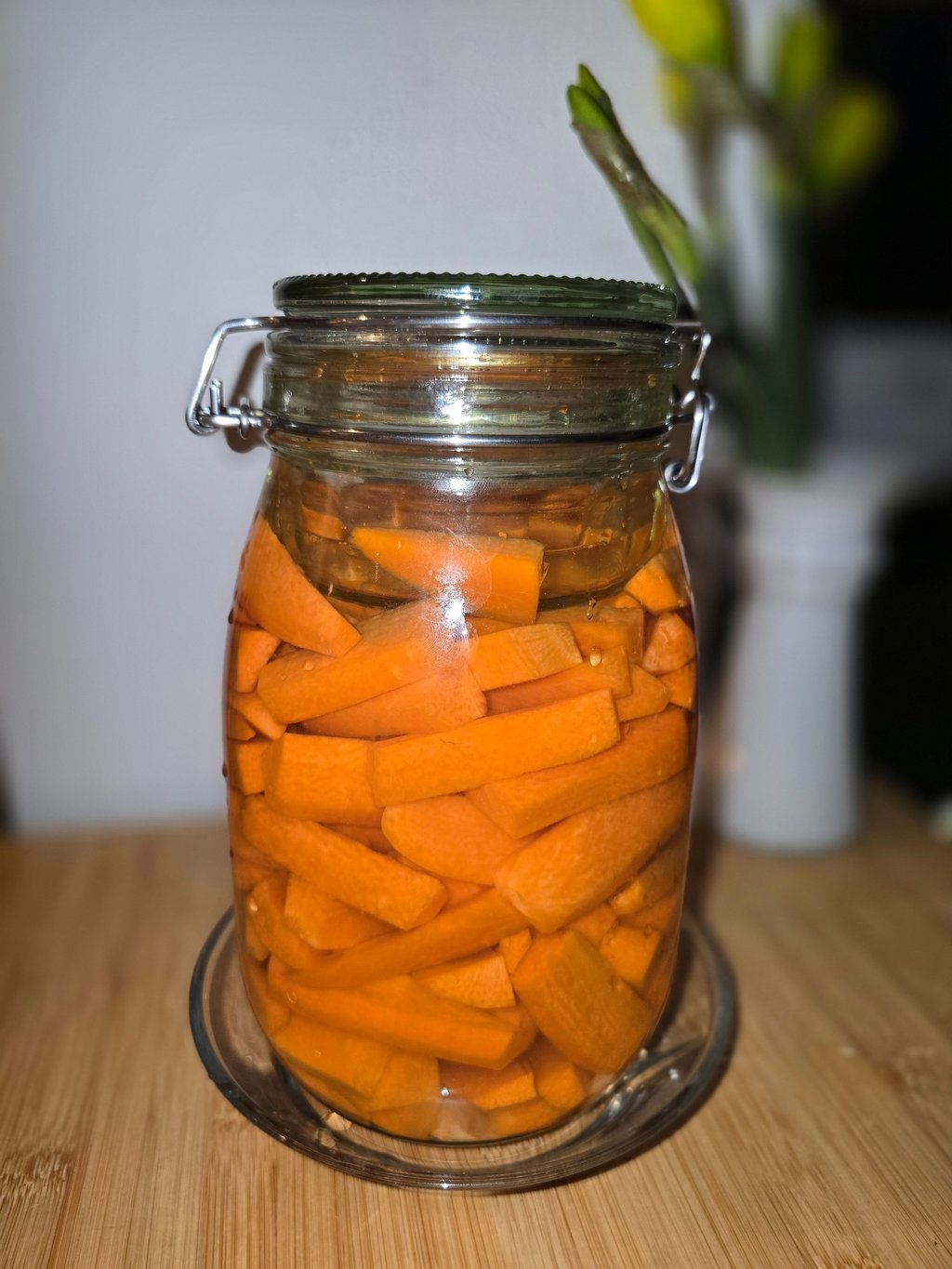
Golden Gut Carrots - Turmeric Fermented Carrots for a Happy Tummy
Time Required
20 min prep + 3-6 days fermenting
Difficulty
🟢 Beginner
What You'll Make
Approx 1000g vibrant fermented carrots
Why This Matters
For Your Gut: Fermented carrots with turmeric combine gut-friendly probiotics from fermentation with turmeric's anti-inflammatory properties, supporting a balanced microbiome while potentially reducing digestive inflammation.
For Your Life: These crunchy, tangy carrots stay fresh for weeks in your fridge and add instant brightness to any meal - no cooking required.
Win: Perfect as a side dish, sandwich topping, salad ingredient, stew or soup, or straight-from-the-jar snack. Your kitchen worktop does the work while you live your life.
🛒What You'll Need
Equipment (You probably have this)
Clean jar with lid (1-1.5L size)
Kitchen scales
Vegetable peeler
Sharp knife and cutting board
Small jar lid (to fit inside of your jar) or weight - to keep carrots submerged
Ingredients (Supermarket-friendly)
1000g carrots - £0.80 at Tesco/Sainsbury's
1-2 garlic cloves, peeled - £0.30
5 cm of fresh turmeric root (peeled and whole) - £1.50
1 slice of peeled orange skin (optional)
30 g sea or Himalayan salt (NOT table salt) - £0.10
Why? Sea salt has no additives that could interfere with fermentation1000ml filtered or boiled & cooled water
Why? Chlorine in tap water can slow fermentation
🧼Prep Work (5 minutes)
Safety First:
Wash hands thoroughly with soap
Clean jar with hot soapy water, rinse well (no need to sterilize)
Set Yourself Up:
Clear counter space near your sink
Have all ingredients measured and ready
Wear gloves when using fresh turmeric (it stains!)
👨🍳Step-by-Step Instructions
1 Prep Your Carrots
Do this:
Peel the carrots clean
Slice the carrots lengthwise and cut into sticks about the size of your pinky finger – aim for evenly sized pieces
Slice garlic cloves in half lengthwise
Peel the fresh turmeric root and cut lengthwise
Why this matters: Uniform size = even fermentation
Tip: Don't stress about perfect cuts! Rustic is fine. Just avoid pieces thinner than a chopstick - they'll get too soft.
2 Make the Brine
Do this:
Mix 30g salt (approx. 1 heaped tablespoon) into 1000ml water
Stir until completely dissolved
Taste it - should be pleasantly salty like seawater
Why this matters: The salt creates an environment where good bacteria thrive and bad bacteria can't survive
3 Pack Your Jar
Do this:
Add turmeric to the bottom of your clean jar
Add garlic pieces
Pack carrot sticks vertically (standing up works best)
Place the weight on top and top it over with the brine until almost to the top
Pour brine over carrots until completely covered (discard the leftover brine)
Why this matters: Vegetables must stay under the brine to ferment safely
Tip: Carrots will float! Place a small jar lid, glass weight on top to keep them submerged.
4 Seal & Set
Do this:
Close the lid finger-tight (not super tight) or remove the rubber seal from Kilner jar and close it
Place on kitchen counter away from direct sunlight
Put a small plate underneath (it might bubble over)
Why this matters: Fermentation creates gas that needs to escape. Room temperature speeds up the process
What Good Looks Like: Jar sitting happily on your counter, carrots completely submerged, looking bright orange with golden turmeric and occasional bubbles.
⏰The Waiting Game
Now What?
Location: Kitchen counter, away from direct sunlight and heat sources
Temperature: 18-24°C is ideal. Warmer = faster. Cooler = slower but more complex flavour
Daily task: "Burp" the jar once daily (open lid to release gas, then close)
Days 1-2: Not much happening yet. Brine might look slightly cloudy. This is normal!
Days 3-4: Tiny bubbles appearing! Brine getting cloudier. Slightly tangy smell developing.
Days 5-6: Active bubbling. Cloudy brine. Tangy, slightly sour smell. Ready to taste!
📱 Reminder: Day 3 - Check your ferment. Day 6 - Taste test time – feel if you like the tanginess of freshy fermented carrots!
🔍Is It Safe? Is It Ready?
✅ GOOD SIGNS (This is normal!)
Cloudy brine (that's the good bacteria at work)
Small bubbles rising to the surface
Tangy, slightly sour smell (like pickles)
Carrots soften slightly but stay crunchy
⚠️ PAUSE & CHECK
Too salty? Rinse carrots before eating, or ferment longer to mellow
Not bubbling by Day 4? Your room might be too cold. Move to warmer spot
White film on top? Harmless kahm yeast. Skim off, ensure carrots stay submerged
Tasting & Storing
First Taste (Day 4-5):
Fish out one carrot stick
Take a bite! It should be crunchy and tangy
Notice the flavours: earthy turmeric, garlicky undertones, pleasant sourness
Taste Test:
• Too salty? Ferment 2-3 more days or rinse before eating
• Too mild? Let it ferment 2-3 more days for stronger flavour
• Just right? Move to the fridge!
Storage:
When to move to fridge: When taste is to your liking (usually Day 4-6)
Remove the weight and close the lid tightly. If using Kilner jar, put the rubber seal back in place and close normally.
How long it lasts: 2-3 months in fridge (keeps improving!)
How to store: Keep in the jar, ensure carrots stay submerged in brine
Flavour development: Continues to ferment slowly in fridge, becoming more complex
🍽️Ways to Eat This
🥪 Quick Lunch
Add to cheese toastie or hummus wrap
🥗 Salad Boost
Chop and toss into any green salad
🍚 Rice Bowl
Top grain bowls for tangy crunch
🥙 Mezze Plate
Serve with hummus and olives
🍛 Curry Side
Perfect cooling contrast to spicy food
🥢 Straight Snack
Eat 2-3 sticks as a probiotic snack
For Gut Health: Start with 2-3 carrot sticks per day. Work up to a small handful daily for optimal benefits.
💡 Pro Move: Save the brine! Use it as salad dressing base, marinade for chicken, or drink a tablespoon as a probiotic shot. Turmeric can be used for hummus – recipe to follow when it is ready